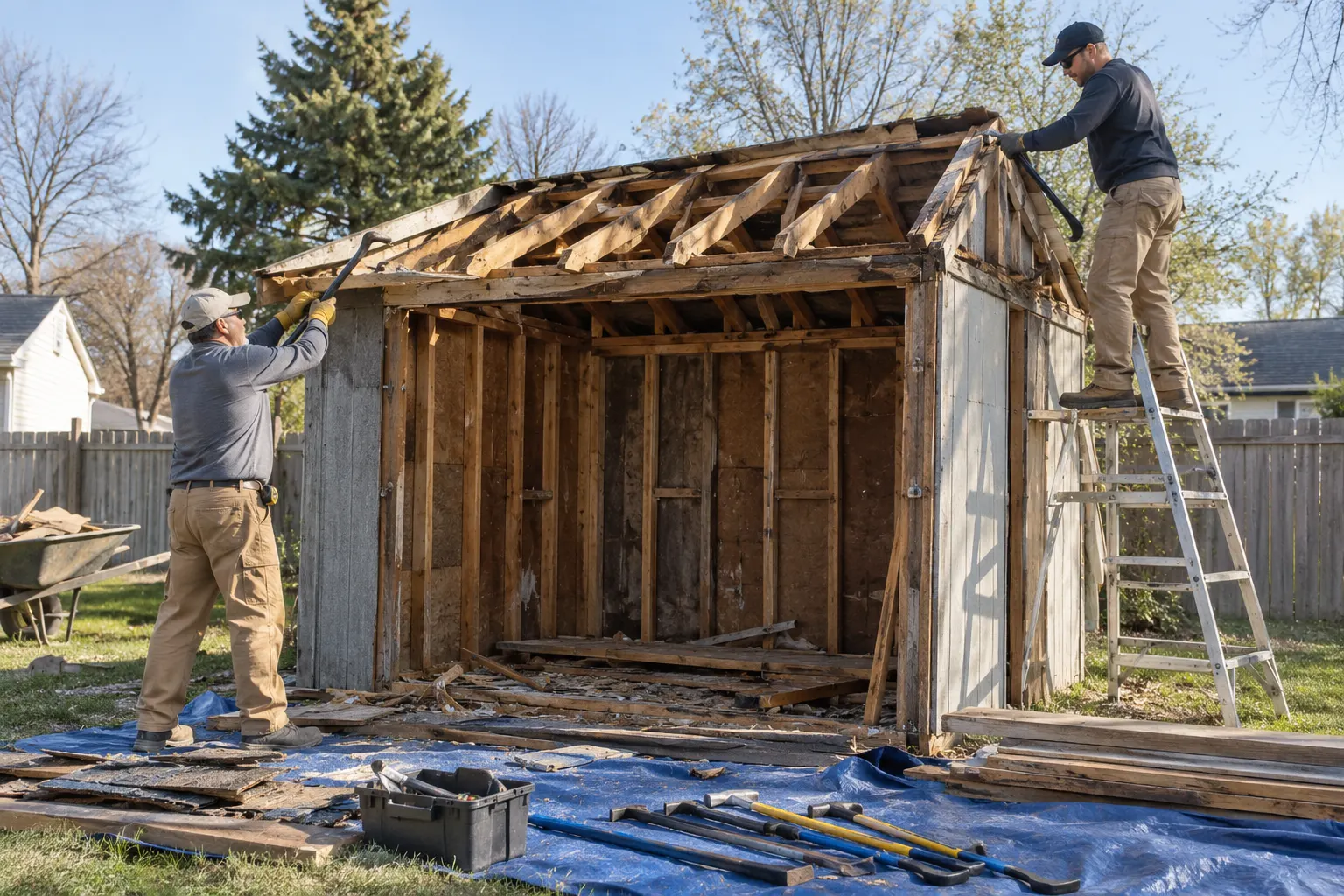
Estimate note: send overall dimensions, roof material, foundation type, five clear photos, gate width, carry distance, and a list of remaining contents.
Dimensions are only the starting point
Length, width, and height help estimate material volume. A tall shed with a loft or heavy framing can take more labor and trailer space than a low kit shed with the same footprint.
The roof can change the teardown
Shingles, multiple roofing layers, sheet metal, and rotted decking each require a different sequence. Photos of the roof edge and interior rafters make the first conversation more useful.
Access affects every trip
A trailer beside the shed is different from a narrow gate and a long carry around the house. Steps, slopes, mud, fences, and overhead branches can change the crew time even when the shed is small.
Foundations and anchors need to be clear
Ask whether the quoted scope includes only the shed or also skids, blocks, anchors, or a slab. Concrete removal should never be assumed from a shed-removal price.
Contents count as separate volume
Old paint, fuel, chemicals, batteries, and propane cylinders need special discussion and may be excluded. Ordinary stored items also add loading and disposal volume.
